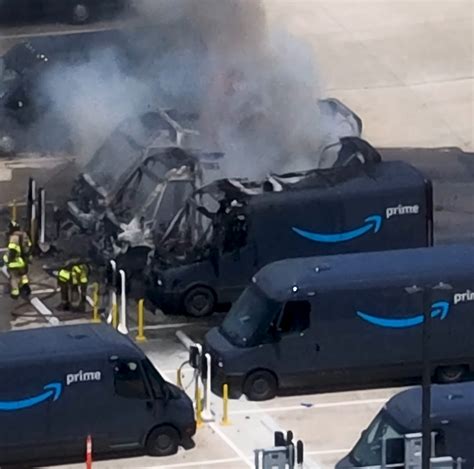
The viral footage of a blazing Amazon delivery van near Washington, D.C., recently sent shockwaves across social media, leading to widespread but inaccurate reports of a vehicle 'explosion' or even a 'terrorist attack' in the nation's capital. As of December 15, 2025, the truth has been definitively clarified by local authorities: the incident was a severe vehicle fire caused by a mechanical failure, not an explosive device. This event, which occurred in Arlington, Virginia, has put a renewed spotlight on the safety and maintenance of Amazon's vast and rapidly growing delivery fleet, prompting crucial questions about the risks associated with both traditional gas-powered and next-generation electric delivery vehicles.
The incident quickly became a major news story due to the dramatic visuals of the fully engulfed van and the thick, black smoke plume visible for miles, even reaching the view of the nearby Pentagon. While the immediate danger was contained by first responders, the misinformation surrounding the event—fueled by the alarming footage—underscores the need for accurate reporting on vehicle safety incidents involving major logistics companies like Amazon.
The Arlington Incident: Debunking the 'DC Explosion' Myth
The event that captivated national attention and triggered the "amazon van explodes in dc" searches did not actually happen within the District of Columbia. It took place in Arlington, Virginia, specifically in the Crystal City area, which is situated just across the Potomac River from D.C. The proximity to the capital and high-profile landmarks like the Pentagon contributed significantly to the sensationalized reporting and the rapid spread of misinformation.
Here is a breakdown of the confirmed facts regarding the incident:
- Location: Crystal City, Arlington, Virginia (near the 2200 block of 23rd Street).
- Vehicle Type: A gas-powered Amazon delivery van, often a Mercedes-Benz Sprinter or a similar model.
- Date: The incident occurred on a recent Sunday afternoon.
- Cause of Fire: Investigators from the Arlington Fire Department and Emergency Medical Services (EMS) determined the cause was an engine malfunction. The fire was mechanical in nature, not an explosion from a package or an external source.
- First Responders: Engine 105 (E105) was credited with quickly extinguishing the blaze.
- Casualties: Crucially, there were no reported injuries to the driver or the firefighters.
- Packages: Authorities confirmed that no packages were involved in the combustion, indicating the fire originated in the engine compartment.
The initial reports of an "explosion" were likely due to the sound of tires bursting or structural components failing under the intense heat of the fire, a common occurrence in severe vehicle blazes, which can sound like a series of small explosions. This visual and auditory drama was then amplified on social media platforms like X (formerly Twitter) and TikTok, where the context of the location was often simplified to "DC."
The Broader Crisis: Engine Malfunctions vs. EV Battery Fires
While the Arlington fire was caused by an engine malfunction in a gas-powered vehicle, the incident has inadvertently drawn attention to a broader, ongoing safety concern for Amazon’s fleet: vehicle fires across different power sources. Amazon operates one of the world's largest logistics fleets, comprising tens of thousands of vehicles, including traditional internal combustion engine (ICE) vans and a growing number of Rivian Electric Delivery Vans (EDVs).
The Risk of Traditional Gas-Powered Vans
The Arlington fire serves as a stark reminder that ICE vehicles are not immune to catastrophic failure. Engine malfunctions, especially in high-mileage commercial vehicles subjected to the rigorous stop-and-go demands of delivery routes, can lead to fires. Issues can include:
- Fuel System Leaks: Ruptured fuel lines or tanks can ignite on hot engine components.
- Electrical Shorts: Wiring issues in the engine bay or dashboard can spark a fire.
- Overheating: Severe engine overheating can lead to fluid leaks and subsequent combustion.
- Poor Maintenance: The sheer volume of Amazon's fleet makes consistent, high-quality maintenance a logistical challenge, potentially leading to overlooked mechanical flaws.
The Emerging Challenge of Electric Delivery Vans (EDVs)
Amazon has partnered with Rivian to deploy 100,000 custom-designed EDVs as part of its sustainability commitment. However, these vehicles introduce a new set of fire risks related to lithium-ion battery technology.
Recent reports have highlighted multiple incidents involving Rivian vans catching fire, including an incident at an Amazon fulfillment center in Houston, Texas, where multiple vans caught fire on site. The causes of EV fires are distinct and often more difficult to extinguish, involving a process called thermal runaway. Potential causes include:
- Battery Damage: Punctures or damage to the battery pack from road debris or accidents.
- Charging Issues: Improper home wiring or inadequate cooling during the charging process have been blamed for previous EV fires.
- Manufacturing Defects: Flaws in the battery cells or management system.
The contrasting causes—a mechanical engine malfunction in Arlington versus battery issues in EDVs—highlight the complex, dual-front safety challenge faced by Amazon as it transitions its fleet.
Amazon’s Response and Future Safety Protocols
In the wake of high-profile incidents like the Arlington fire and the various Rivian van fires, the scrutiny on Amazon's vehicle safety and maintenance protocols has intensified. The company relies on a network of Delivery Service Partners (DSPs), which adds a layer of complexity to vehicle ownership and maintenance oversight. Ensuring that tens of thousands of vehicles, owned by various partners, meet stringent safety standards is a monumental task.
Key Safety and Maintenance Entities
To mitigate risks, Amazon and its partners must focus on several key areas:
- Preventative Maintenance Schedules: Implementing and strictly enforcing robust, regular maintenance checks for all gas-powered vans to catch engine malfunctions before they become catastrophic.
- Driver Training: Equipping Amazon drivers with the knowledge to recognize early warning signs of mechanical failure, such as unusual smells, smoke, or dashboard warnings, and instructing them on immediate safety procedures, including safely evacuating the vehicle and calling 911.
- Advanced EV Battery Monitoring: Utilizing sophisticated software and hardware to monitor the health and temperature of the lithium-ion battery packs in the Rivian EDVs to detect early signs of thermal runaway.
- Vehicle Recalls and Inspections: Promptly addressing any manufacturer recalls or safety advisories from vehicle partners like Mercedes-Benz or Rivian.
- Fire Suppression Technology: Considering enhanced fire suppression systems within the engine and cargo compartments of all delivery vans.
The Arlington incident, initially misconstrued as a major explosion in a major metropolitan area, serves as a critical case study in logistics safety. It underscores that while the transition to electric vehicles introduces new risks (like battery fires), the fundamental challenges of maintaining a massive fleet of traditional vehicles (like engine malfunctions and fuel system integrity) remain a persistent threat to public safety and Amazon’s operational continuity. For residents near the National Landing area and across the Washington Metropolitan Area, the event was a vivid reminder of the constant flow of commercial traffic and the inherent risks on the nation's roadways.


Detail Author:
- Name : Prof. Ozella Gutmann
- Username : kkutch
- Email : stamm.bill@hotmail.com
- Birthdate : 2006-12-09
- Address : 877 McLaughlin Road Nitzscheland, VT 47363
- Phone : +1 (602) 553-5391
- Company : Connelly-Sanford
- Job : Pharmaceutical Sales Representative
- Bio : Repudiandae distinctio veritatis velit qui repellendus omnis. Ad illo consectetur est autem distinctio quae enim odio. Libero illum molestiae voluptatem.
Socials
linkedin:
- url : https://linkedin.com/in/rafael_xx
- username : rafael_xx
- bio : Nobis qui accusamus harum beatae id.
- followers : 1836
- following : 2981
twitter:
- url : https://twitter.com/rafael3739
- username : rafael3739
- bio : Facere necessitatibus recusandae ipsum. Ullam animi totam eaque voluptatum. Odit porro ipsam animi et ut nemo quod. Unde doloribus et consequuntur id et.
- followers : 3444
- following : 2550
